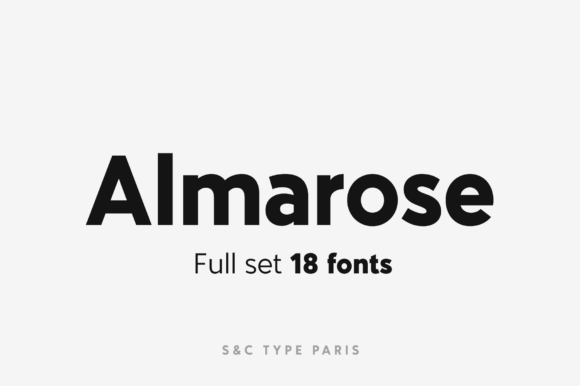
Almarose Font: A Geometric Sans Serif for Editorial Design
I was recently tasked with redesigning the layout of a digital lifestyle magazine, and one of the first decisions I had to make was selecting a typeface that would carry the publication’s visual identity. I needed something modern but not too cold, functional yet with a hint of personality—something that could work across headers, pull quotes, and even in subtle background text. That’s when I discovered Almarose, a geometric sans serif font with a distinct balance between utility and charm.
Almarose in Digital Magazine Covers and Headers
As a sans serif font, Almarose immediately stood out for its use on a digital magazine cover. Its clean lines and structured geometry gave the title a professional feel, while the slight variation in stroke endings introduced just enough warmth to avoid looking sterile. The 9 weights—from Thin to ExtraBlack—allowed me to experiment with layering, using the lighter styles for taglines and the bolder ones for headlines. Each weight maintained the same architectural integrity, making it easy to build a consistent visual hierarchy without sacrificing impact.
For section headers within the magazine, I paired the regular weight of Almarose with a soft italic for subheaders. The rhythm it created felt balanced and inviting, especially when contrasted with a traditional serif body font. It didn’t overwhelm the reader, which is essential for maintaining editorial flow and ensuring that each story gets the attention it deserves.
Almarose for Recipe Ebooks and Lifestyle Content
When working on an Almarose recipe ebook, I found the font to be surprisingly versatile. The bold weights worked well for chapter openers and ingredient lists, while the medium and regular styles provided a clear and readable tone for longer passages like cooking instructions or meal suggestions. Unlike many other sans serif fonts that can feel rigid or overly technical, Almarose brought a sense of approachability, making it ideal for content aimed at home cooks and wellness enthusiasts alike.
The inclusion of italics was a bonus for stylistic flourishes. I used them sparingly—for emphasis in tips and side notes—but they added a refined touch without clashing with the rest of the layout. In this context, Almarose helped reinforce the brand’s identity as modern, organized, and slightly aspirational—perfect for digital publications that aim to inspire action or change habits.
Almarose in Newsletter Graphics and Pull Quotes
One of my favorite applications for Almarose has been in newsletter design. Whether crafting a header for a monthly update or testing a pull quote in a long-form article, the font’s presence is both strong and understated. Using the Medium weight in a centered header for a client’s newsletter instantly elevated the look from generic to polished. It felt contemporary but trustworthy, exactly what you want for content marketing materials.
In a recent test, I embedded a few pull quotes using the SemiBold and Bold weights of Almarose. The result was visually arresting—readers naturally gravitated toward those highlighted sections. This kind of engagement is invaluable in newsletters where scannability and readability are key. The font doesn’t demand attention, but it certainly holds it when placed strategically.
Almarose for Printables and Worksheets
Designing printable worksheets for a productivity planner project, I needed a font that would perform equally well on screen and in print. Almarose delivered. Its geometric structure ensured legibility at smaller sizes, and the variety of weights allowed me to differentiate between task headers, section titles, and supporting text. The italic variations were also useful for call-out boxes and motivational prompts, adding a gentle flair without compromising clarity.
What makes Almarose stand out in these kinds of projects is its ability to maintain a cohesive look across different formats. From digital downloads to printed planners, the font adapts smoothly, which is crucial when you’re creating multi-platform content. As a designer who often works with Fonts intended for educational or organizational tools, this kind of adaptability is rare and highly appreciated.
Font Pairing and Editorial Balance
While Almarose is a standout sans serif font, it thrives best when paired with complementary typefaces. For example, in a digital magazine layout, I matched Almarose with a classic serif font for body copy. This pairing created a beautiful contrast—modern and dynamic for headings, warm and grounded for reading. Similarly, in a wedding guide, I used Almarose alongside a delicate script font for names and personal touches, allowing the geometric sans serif to anchor the design with structure and clarity.
Another effective combination involved using Almarose in conjunction with a more minimalist sans serif for captions and navigation elements. This layered approach reinforced a clean and modern aesthetic, particularly useful in web design and social media graphics where space and speed matter. Always remember to consider font pairing when choosing Almarose—it enhances your designs and supports a more sophisticated typographic system.
Readability Across Platforms
One concern I always have when selecting a new font is how it performs on various screens and in different formats. Almarose impressed me in all scenarios. On mobile devices, the thinner weights remained legible without appearing fragile. When exported to PDFs, the font retained its crispness and alignment, which is vital for downloadable resources like coaching workbooks or course PDFs.
However, I did notice that while Almarose is excellent for headlines, pull quotes, and short bursts of text, it may not be the best choice for dense paragraphs or small captions. Its character design, though elegant, carries a slightly expressive edge that could fatigue readers in extended body copy. But for editorial designers who need a premium font that works across multiple elements, Almarose fills that role admirably.
Practical Considerations for Using Almarose
Before committing to Almarose in any commercial project, I recommend checking the included weights, alternates, and ligatures. These details can significantly affect the final output, especially if you're building templates or selling digital products. The multilingual support is solid, covering most European languages, which is helpful for international audiences or niche content creators targeting global markets.
Also, ensure you understand the licensing terms. If you're planning to include Almarose in paid newsletters, printables, or client-facing publications, having the right commercial license is essential. Many Fonts look great but come with limitations that can trip up designers later on. With Almarose, I found the licensing process straightforward and transparent, which is always reassuring.
Conclusion-Less Reflection
Almarose is a font that quietly does its job well. It brings a geometric sans serif clarity to editorial layouts while offering enough personality to stand out in branding contexts. Whether you're designing a digital magazine, a printable planner, or a newsletter graphic, Almarose provides the flexibility to shape your message with precision and style.
If you’re looking for a reliable, versatile sans serif font that can help define your publication’s mood and structure, give Almarose a try. Test it in your next project—whether it’s a blog header or a chapter opener—and see how it elevates your content with calm confidence and thoughtful detail.