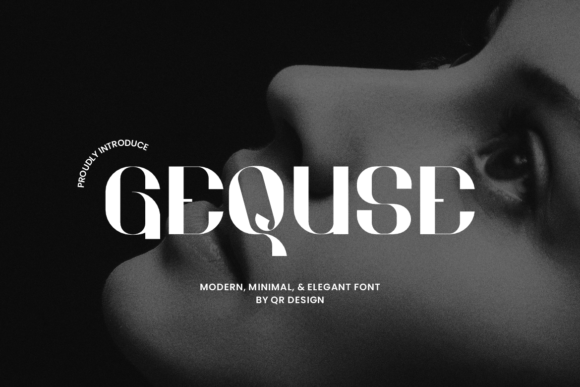
Gequse Font: A Stylish Bold Typeface for Branding Projects
I recently sat down with a fresh project — helping a local skincare brand craft a new visual identity. The client had a clear vision: they wanted something modern yet warm, bold but not aggressive. As I opened up my design software and began sketching out the first mockups, I found myself reaching for Gequse, a gorgeous and bold sans serif font that immediately felt like the right fit.
Using Gequse in Logo Design for a Skincare Brand
The logo was going to be the centerpiece of their branding, so it needed to feel confident and dynamic without being overwhelming. I placed the name “Nourish & Bloom” into a few different typefaces, but when I switched to Gequse, everything clicked. Its strong character shapes and open apertures gave the logotype a clean, stylish edge while maintaining enough weight to feel premium. The subtle nostalgic charm added just the right amount of warmth, which is essential for a brand focused on self-care and natural ingredients.
I loved how the font’s geometry balanced structure and approachability. The uppercase forms looked especially striking as a headline, which worked well for a minimalist aesthetic. Since this was a small business, I also appreciated how Gequse handled shorter text formats — perfect for a logo that would appear on product labels, social media bios, and packaging seals.
Gequse in Packaging Mockups and Product Labels
Once the logo was set, I moved on to designing the product packaging. Here, I tested Gequse in several weights to see how it performed in different sizes and contexts. On a bottle label, the regular weight read clearly and felt elegant. For a sticker-style tagline at the bottom, I used the bold variant, which really stood out against the soft pastel background we were considering.
One thing that stood out was how versatile Gequse could be in editorial or packaging design. Even though it’s a sans serif font, its personality wasn’t too rigid or cold. It managed to convey professionalism and creativity simultaneously — exactly what this brand needed to stand apart in a crowded market.
Design Observations: How Gequse Feels in Print and Digital Formats
When I printed the mockups for review, the contrast between the bold Gequse headlines and the more delicate body copy became even clearer. This kind of visual hierarchy is crucial for any branding system, and Gequse helped establish that effortlessly. In digital formats, such as an Instagram post promoting their latest serum, the font held up beautifully on both desktop and mobile screens. The clean lines ensured high readability even at smaller sizes.
I also noticed how the font’s nostalgic character came through in certain details — like the slightly rounded corners on some letters. It gave the design a touch of humanity without sacrificing modernity. That’s rare in sans serif fonts, and it made Gequse feel like a thoughtful choice rather than just another trend.
Pairing Gequse With Supporting Typefaces
For a complete brand system, I always look for good font pairing. Gequse paired exceptionally well with a lighter, more geometric sans serif for subheadings and body text. It also complemented a subtle script font in taglines and quotes, adding depth and contrast without clashing. I didn’t need to overthink it; the font’s inherent style made it easy to integrate into a cohesive palette.
If you’re using Gequse in your next branding project, consider using it as the display or headline typeface, then pair it with a secondary font for supporting content. This way, you maintain consistency while ensuring legibility across all touchpoints.
Testing Gequse Before Committing to a Full Brand System
Before finalizing the font, I created a few test variations. I overlaid Gequse onto photos of real products, mocked up a website header using it for the hero section, and even tried it on a business card layout. Each time, the font delivered a strong presence without overpowering the rest of the design.
What I learned from this process is that it’s important to test Fonts like Gequse in multiple environments. Will it work in black ink on paper? Does it render cleanly in web format? Is there enough variation in weights and styles to cover all needs? These are practical questions every designer should ask before committing to a premium font for a full-scale project.
Why I Chose Gequse Over Other Sans Serif Fonts
There are plenty of sans serif fonts out there, but Gequse stood out for its balance of boldness and elegance. Unlike some heavier sans serifs that can feel too industrial or too playful, Gequse offered a refined, confident tone. It wasn’t just about looking good; it was about feeling right for the brand’s voice.
Another factor was the included alternates and ligatures, which allowed me to tweak specific characters for better spacing or a more stylized appearance in key areas like the logo. This flexibility is something I always look for in a commercial font, especially when working with clients who want a custom look without hiring a typeface designer.
Real-World Use of Gequse in Social Media Graphics and Flyers
In one of the later stages, I designed a series of Instagram posts and flyers to accompany the brand launch. For the main headline on each piece, I used Gequse in bold, making sure it was centered and given enough white space to breathe. The result was a consistent, eye-catching style that aligned perfectly with the brand’s identity.
On the flyer, I layered Gequse over a gradient background. Because of its strong contrast and clarity, the text remained readable and impactful — no matter where the viewer looked. This is a big win when designing materials that need to be effective at a glance, like posters or event announcements.
Final Project Touches: From Mockup to Delivery
As the project neared completion, I integrated Gequse into all official brand assets: from the shop sign to email headers, from packaging mockups to a short-form video title. It was reassuring to see how consistently it performed across these different applications. The font didn’t lose its character, nor did it become visually fatiguing after repeated use.
I also checked the file formats and licensing information to make sure everything met the client’s commercial needs. It turned out that Gequse provided all the necessary variants for print and web, and the licensing terms were straightforward. That’s something many designers overlook, but it’s essential for delivering a professional solution.
Practical Tips for Using Gequse in Client Work
- Use it boldly: Gequse shines as a display or headline Font. Avoid stretching it too thin in long paragraphs.
- Test it early: Try Gequse on different materials (print, digital, signage) before finalizing a brand system.
- Look for alternates: Explore the included ligatures and alternate glyphs to add subtle personality to logos and headlines.
- Balance with subtlety: Pair it with a lighter sans serif or a classic serif for contrast in brand identity projects.
- Check multilingual support: If your project requires non-Latin characters, confirm that Gequse supports them.
Gequse Adds Nostalgic Charm to Modern Typography
It’s easy to get caught up in trends when choosing a typeface, but Gequse feels timeless. Its boldness speaks to confidence, while the nostalgic undertone gives it a softer, more human quality. That duality makes it incredibly useful for brands aiming to blend innovation with tradition.
Whether you're designing a boutique storefront, crafting a creative studio’s website, or building a handmade product line, Gequse brings a sense of purpose to every letterform. And because it’s a sans serif, it adapts easily to different color schemes and layouts — a huge plus in today’s fast-paced design world.
How Gequse Impacts Brand Perception and Recognition
Typography isn’t just about aesthetics; it plays a significant role in how audiences perceive a brand. In this case, Gequse helped reinforce the idea of a trustworthy, modern skincare brand with a personal touch. The font’s confidence elevated the overall impression, while its subtle warmth made it feel accessible and inviting.
That’s the magic of a well-crafted Font — it becomes part of the brand’s language. When I showed the client the final mockups, they were impressed by how quickly the visual identity came together. They didn’t just see a logo; they saw a story, and Gequse was the narrator.
Gequse in Website Headers and Merchandise Designs
Later, I worked on the brand’s website prototype. The homepage hero section featured the brand name in Gequse — large, centered, and bold. It created an immediate impact, guiding users’ attention directly to the core message. For merchandise like stickers and tote bags, I used a condensed version of the same font to maximize impact in limited spaces.
Its performance in both high-contrast and low-contrast settings was impressive. Whether on a white background or a textured label, Gequse maintained its clarity and visual appeal. That adaptability is what makes it a solid investment for any Fonts collection focused on branding and creative work.
Ensuring Consistency Across All Brand Materials
Consistency is key in brand identity, and Gequse made that easier. Once the primary and secondary typography was chosen, applying it across various design assets was seamless. I used the same baseline spacing and leading throughout the project, which kept the visuals aligned and professional.
This kind of reliability is why I recommend Gequse for anything from packaging to social media templates. It doesn’t just look great; it works great in practice.
Conclusion Not Needed — Just Results You Can See
By the end of the project, the client had a complete visual identity built around Gequse. It wasn’t just a font choice — it became a cornerstone of the brand’s personality. From the logo to the product descriptions, everything felt unified and intentional. And that’s the mark of a great typeface in action.
If you're working on a brand project and need a sans serif font that’s bold, stylish, and adaptable, give Gequse a try. It might just become the unexpected gem that elevates your next design from good to unforgettable.