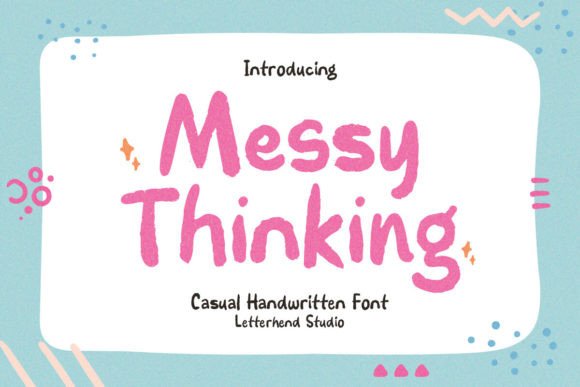
Messy Thinking Font Review: A Natural Script for Creative Branding
As a brand designer who’s worked on everything from café identities to creative studio logos, I’m always looking for fonts that bring personality and authenticity to the table. Recently, I tested Messy Thinking, a Script Handwritten font, in a real branding project — and it made an impression. Here’s what happened when I tried it out.
Messy Thinking in Logo Design
I was working on a local bakery’s identity refresh when I first opened up Messy Thinking. The client wanted something warm, approachable, and handcrafted to reflect their artisanal values. As a Script Handwritten typeface, Messy Thinking immediately stood out with its natural flow and subtle imperfections — the kind of details that make a logo feel like it was written by a human rather than generated by a machine.
Its casual script style lent itself well to short names and taglines. I used it as the headline in the logo and paired it with a clean sans serif for supporting text. The result? A visual contrast that felt both modern and personal. It’s clear this Fonts is crafted for display use, especially in logos where you want to communicate creativity or a handmade aesthetic without overdoing it.
How Messy Thinking Handles Brand Boards and Visual Systems
After finalizing the logo, I moved on to creating a brand board using Messy Thinking as the primary headline font. Its organic curves and varying stroke weights gave the brand assets a dynamic energy, which is exactly what independent brands crave to stand out in crowded markets.
On mood boards and brand guidelines, I found it useful to include alternate characters and ligatures to showcase how the Script Handwritten font can be adapted across different applications. While it doesn’t work for body copy due to its cursive nature, it shines in key brand elements like slogans, hero headers, and call-to-action phrases.
Testing Messy Thinking on Packaging Mockups
Next, I applied Messy Thinking to a mockup of the bakery’s packaging labels. At first glance, it looked perfect for product names like “Butter & Joy” and “Sunrise Scones.” But when I zoomed in, some characters started to feel too delicate for smaller print sizes. This is common with many handwritten Fonts, but worth noting if you’re planning to use it on small tags or intricate designs.
For larger packaging elements like box headers or window decals, however, Messy Thinking delivered charm and legibility. It helped differentiate the brand from competitors using more formal scripts or rigid typography. The natural shape of the letters made them feel inviting, almost like reading a handwritten note from the baker themselves.
Using Messy Thinking in Web and Social Media Headers
One of my favorite uses of Messy Thinking was on the homepage hero section of the bakery’s website. In web design, people often default to bold sans serifs for headlines, but I wanted something softer yet still strong enough to catch attention. The Script Handwritten vibe of Messy Thinking added just the right amount of whimsy while maintaining professionalism.
It also performed well in social media layouts. When placed on an Instagram post promoting a seasonal offering, the font helped create a sense of urgency and warmth. However, I recommend using it sparingly online — maybe once per page or post — to avoid overwhelming users or hurting readability. Still, it’s a great Fonts choice for short phrases, calls to action, or signature-style headers.
Font Pairing Suggestions for Messy Thinking
If you're considering using Messy Thinking in your next project, here are a few practical font pairing tips:
- Pair with a clean sans serif (like Montserrat or Lato) for digital interfaces and body text. This combination balances creativity with clarity.
- Combine with a serif font (such as Playfair Display or Merriweather) for a more elegant look, especially in editorial design or luxury branding contexts.
- Avoid other script or handwritten fonts unless you have a very specific aesthetic in mind. Messy Thinking is already expressive enough on its own.
The font’s character set includes alternates and swashes, which gives you flexibility when designing for unique branding moments. Just remember to test each variation in context before locking in the final layout.
When Not to Use Messy Thinking
While Messy Thinking has a lot going for it, there are definitely scenarios where it might not be the best fit. For example:
- Projects requiring long paragraphs of body text. Its handwriting style isn't optimized for dense reading.
- Corporate or financial branding. The informal tone may clash with the need for professionalism and authority.
- Small-scale print work like fine-typed menus or address labels. Some strokes can get lost in tiny sizes.
It's important to understand that Messy Thinking is a display Fonts at heart. That means it works best in large formats or short bursts of text where the focus is on visual appeal rather than information density.
Practical Tips for Testing Messy Thinking Before Final Use
Before committing to Messy Thinking in a client’s branding system, I suggest doing the following:
- Print the font on physical materials like business cards or mock-up paper to see how it holds up under various lighting and printing conditions.
- Test it in multiple sizes and colors to ensure it remains readable and aesthetically pleasing across all platforms.
- Use it in both digital and print environments to evaluate its performance in different mediums.
- Review the included file formats and licensing options — especially if you plan to use it in commercial projects or on merchandise.
These steps help confirm whether Messy Thinking will truly enhance the brand or if it’s just another trendy Script Handwritten font that looks nice but fails to deliver in practice.
Messy Thinking for Brand Perception and Recognition
What really impressed me about Messy Thinking was how it subtly influenced the overall brand perception. The casual, fluid script evoked a sense of authenticity and approachability — qualities that resonate deeply with audiences today. Whether you're building a brand for a handmade soap shop or a boutique fitness studio, this Fonts helps tell a story.
Its irregular rhythm and soft edges gave the bakery a friendly, neighborhood vibe. People don’t just see the name; they feel it. And that emotional connection is powerful in branding. Just be sure to maintain consistency — even within the variations of the font — to keep the brand recognizable across touchpoints.
Final Licensing and Commercial Use Notes
Before you go ahead and use Messy Thinking in any commercial font project, double-check the font’s licensing terms. Many handwritten Fonts require additional permissions for use in print-on-demand products, websites, or merchandising. You wouldn’t want to fall into a legal trap later because the font wasn’t intended for broad commercial deployment.
Also, review what styles and alternates come with the purchase. If you’re building a comprehensive brand identity, having access to different weights or decorative elements can save time and add depth to your design system.
In short, Messy Thinking is a versatile and expressive Script Handwritten font that adds a personal touch to logos, packaging, and digital headers. It’s not for every project, but for the right ones — those needing warmth, creativity, and a bit of edge — it could be exactly what you're looking for.