Baby Creamy Font Review: A Versatile Script for Modern Branding
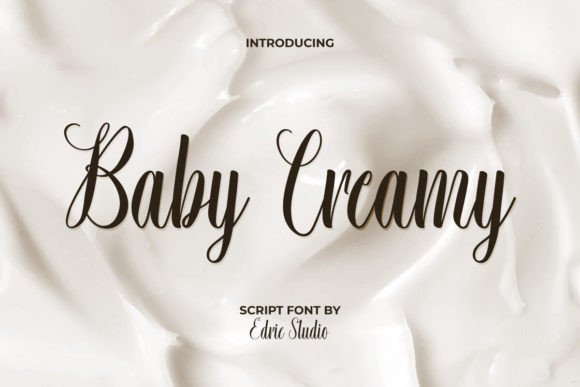
There I was, staring at a blank brand board for a local boutique’s identity refresh. The client wanted something soft yet professional—something that felt personal but could scale across all their branding materials. That’s when I opened up my font library and found Baby Creamy. As a Script Handwritten typeface, it stood out not just for its aesthetic but for how it immediately made the design feel more approachable and elegant.
Baby Creamy in Logo Design for a Clothing Brand
I started by testing Baby Creamy on a logo draft for a small women’s clothing line. The font is a soft script font, with gentle curves and a refined rhythm that gives off a warm, artisanal vibe. It’s not overly ornate like some other handwritten fonts, which means it holds up well in both digital and print formats. I used it as a primary headline in the logo and paired it with a clean sans serif for body text. The contrast worked beautifully—Baby Creamy added character without overwhelming the layout.
One thing I noticed early on is that it reads surprisingly well even in smaller sizes compared to many script fonts. Not perfect for long paragraphs, but definitely usable for short taglines or signature lines in logos. Its legibility is a standout trait among Fonts in the handwritten category.
Baby Creamy on Packaging Mockups for Accessories
Next, I applied Baby Creamy to a packaging mockup for a handmade accessory line—think leather bracelets and embroidered scarves. The font’s neat and classy impression gave the product a touch of sophistication while still feeling handcrafted. On a label, it looked especially inviting. The subtle swashes didn’t distract from the product name but instead elevated the overall look.
I also tested it in a few variations: bold, regular, and light. Each had its place. The bold version worked best for product titles, while the lighter weights were ideal for secondary information like “Handmade with Love” or “Limited Edition.” For an accessories brand, this kind of flexibility is invaluable—it allows for a cohesive visual language without repeating the same weight everywhere.
Using Baby Creamy in Social Media Layouts
When it came to social media graphics, Baby Creamy really shined. I used it for Instagram post headers and quote cards, where it brought a sense of warmth and authenticity. Especially for lifestyle brands or niche audiences, having a creative font that feels genuine can significantly boost engagement. The softness of the strokes helped create a calming mood, which aligned perfectly with the brand’s message of slow living and craftsmanship.
Its performance in short phrases was top-notch. Whether it was a product caption or a seasonal greeting, Baby Creamy always delivered a polished result. However, I did notice that in longer blocks of text, the script style starts to lose clarity. It’s not meant for reading large amounts of content, so sticking to headlines and accents is key.
Baby Creamy in Brand Boards and Business Cards
I included Baby Creamy in a brand board for a new architectural firm that wanted to blend modernity with tradition. The font provided a human touch against sharp geometric shapes and minimalist layouts. It worked especially well on business cards—there’s something about the way the letters flow that makes the brand feel more personable.
On printed cards, I observed that the texture of the paper enhanced the font’s softness. It wasn’t just a pretty typeface; it became part of the tactile experience. This shows how Baby Creamy can add depth to your brand identity beyond just the visual. Just be sure to check how it renders at different print resolutions; I had to tweak the size slightly for optimal results.
Baby Creamy Font Pairings for Editorial and Web Design
For editorial design, I paired Baby Creamy with a sturdy serif font for subheadings and body copy. The combination created a beautiful balance between artistry and readability. In web design, I used it sparingly—mainly for hero sections and call-to-action buttons. While it looks great on screen, using it excessively in body text can hurt usability. Still, for websites focused on fashion, beauty, or creative services, Baby Creamy adds a distinctive flair that helps build brand recognition.
If you’re considering Baby Creamy for commercial use, make sure to review the licensing terms. Like most premium fonts, it requires proper licensing for use in client work, merchandise, or templates. You wouldn’t want to fall into a legal trap by assuming it’s free for all uses—especially if you're creating assets for an online shop or print-on-demand service.
Baby Creamy vs. Other Script Fonts in Real Projects
Compared to other script handwritten fonts I’ve used, Baby Creamy stands out for its versatility. Some scripts are too whimsical for professional settings, others too rigid for creative ones. But Baby Creamy manages to walk the line. I tried it alongside a few similar Fonts in a bakery logo project and quickly realized it had a cleaner baseline and better kerning than many of its peers.
What I appreciated most was how easy it was to integrate into a full brand system. It didn’t demand special treatment or extra spacing adjustments. The alternates and ligatures offered enough variety to keep things visually interesting without complicating the design process. For someone who wants a modern typography solution that still feels personal, this is a solid pick.
Who Should Use Baby Creamy?
Baby Creamy is particularly well-suited for industries that value elegance and approachability—like fashion, home décor, wellness, and lifestyle brands. It’s also a strong choice for architecture firms looking to add a human element to otherwise technical visuals, or for clothing brands wanting to evoke a sense of craftsmanship and care.
- Perfect for logo design and brand headers
- Ideal for packaging design and product labels
- Great in social media graphics and promotional posts
- Works well in business card and stationery designs
- Supports multilingual characters, making it adaptable for international projects
However, if you’re designing for a formal corporate environment or need high readability in body text, this might not be the best option. Baby Creamy excels in display contexts, so treat it like a decorative accent rather than a main typeface for dense content.
Practical Tips for Testing Baby Creamy Before Final Use
Before committing to Baby Creamy in a client project, I recommend doing a quick test run. Place it in a few real-world scenarios: try it on a mockup of a storefront sign, a sample product label, or a homepage header. See how it looks in various sizes and on different surfaces. Does it hold up at 24pt? How does it render on mobile screens?
Also, experiment with font pairing. Try it with a classic serif like Georgia or a modern sans serif such as Montserrat. Observe how each combination affects the hierarchy and tone of the design. This will help you determine whether Baby Creamy is the right fit for your particular brand identity needs.
Final Thoughts on Buying Baby Creamy
In the end, Baby Creamy became a staple in my toolkit for boutique-style branding and creative startups. Its blend of charm and functionality makes it one of those rare Fonts that you don’t have to overthink. It fits naturally into a wide range of applications, from clothing brands to architecture presentations, and brings a level of sophistication that’s hard to achieve with generic script fonts.
Whether you’re a graphic designer working on a brand refresh or an entrepreneur crafting your own visual identity, Baby Creamy offers a unique voice. It’s not just another handwritten font—it’s a thoughtfully designed typeface that elevates the emotional appeal of your work without sacrificing professionalism.
So go ahead, give it a try. Open your next design file, drop in Baby Creamy, and see how it transforms your project. Chances are, you’ll find yourself reaching for it again and again.